The Audiobook

Listen in German, 6 min
To begin
At the beginning of this audiobook you will now hear a short introduction to the content and structure of this book, and first of all a note on how to operate this audiobook.
You can listen to all chapters automatically one after another, or individually. Operating the player is simple, and by default it is set to all chapters in sequence.
We now wish you a pleasant journey to The Hydration Code.
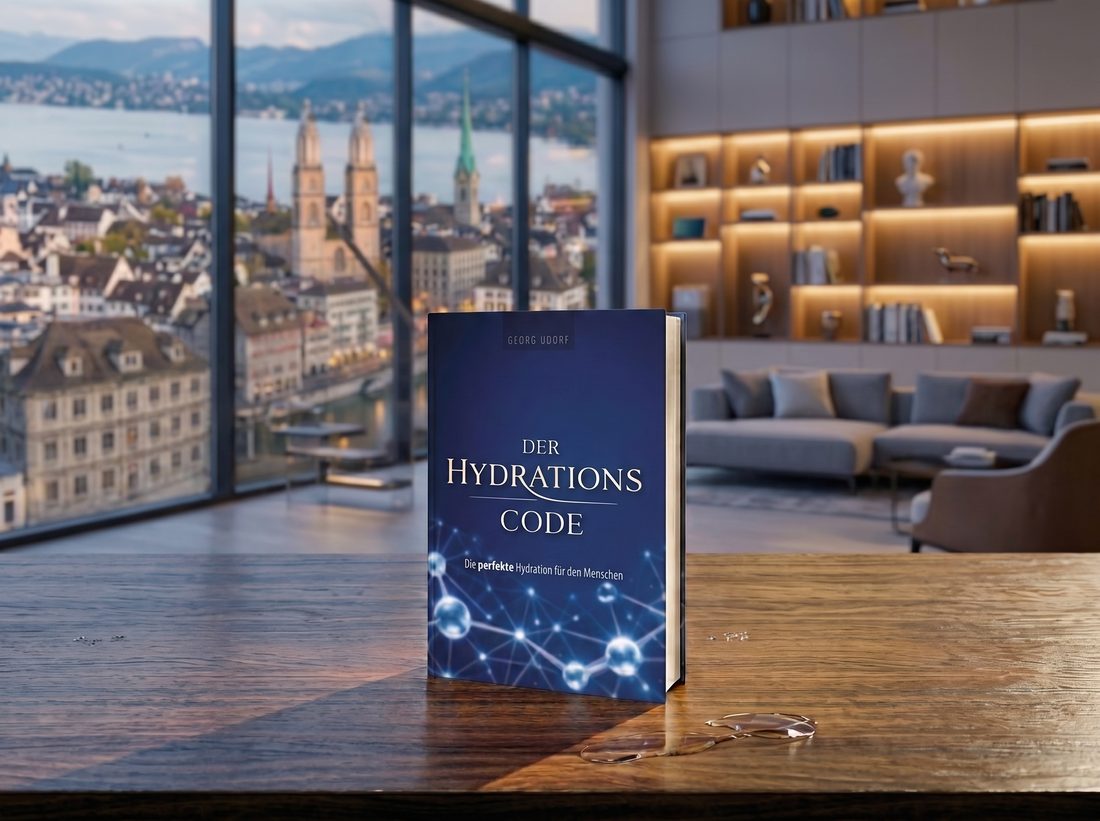
“The Hydration Code”
or the question “What is the best hydration for human beings?”
By Georg Udorf, 2026
You have very probably already drunk a sip of water today. If not, you could do so at any time. You have done it countless times. Simply drinking water is the most normal thing in the world.
So it is with the most ordinary things that we take for granted, such as water. Interestingly, what we see and use every day somehow, at some point, becomes in a certain way invisible. Things that only become visible again when they are suddenly gone and no longer available.
This book invites you to look very closely at this element and to be able to ask yourself for once, what actually is water? What significance does water have for you, quite personally, and for us as humanity?
The question of this book is as simple as it is complex. “What is the best hydration for human beings?” Which smartphone is the best? Which sports team is the best? Which country is the best for a holiday? For many of us the answers to these are self-evident.
And yet the plain, simple question, what does perfect hydration for our body look like? This simple question actually seems almost exotic. And that although water represents the absolute basis of our life.
One reason for this could be that the answer to the question of what perfect hydration for human beings is, that this simple question was answered long ago. For a long time. Absolutely and lastingly. The answer to one of the most essential questions of our life has been answered superbly by the ingenious marketing departments of the beverage manufacturers. You can read these answers directly on the labels of the elegantly designed bottles. And your subconscious has long since internalised the answers through endless advertising.
This book is a journey to various stations of knowledge. A journey from the coarse to the fine.
The first chapter is meant to awaken your fascination for what wonderful water actually is, entirely independent of its effect. After the first chapter you will better understand why it can truly be very worthwhile to purify your drinking water.
Which kinds of water purification exist we deal with in Chapter 2. You will gain basic technical knowledge and come to understand which is by far the highest kind of water purification.
Chapter 3, “The Legacy of Alchemy”, is devoted to the highest kind of water refinement.
I wrote the fourth chapter with the joy one can feel when one is able to meet superstition and false beliefs with valid data. In Chapter 4 you will be initiated into a secret that you are probably hearing for the first time.
In Chapter 5 we come to a better understanding of how the very purest water acts in our organism and what an enormous role it plays in our body. We shed light on this with the most modern biophysical facts.
Chapter 6 deals with what is perhaps the most fitting analogy when one sets out to write a book about the perfect hydration for human beings. In what is perhaps the most personal way, Chapter 6 shows you the fantastic means your own organism has developed to flood the most important centres of your body with the purest water your body itself is capable of producing.
Most of you will probably be hearing about this astonishing process for the first time. It is quite possible that you will be very fascinated by it.
For no less significant was its discovery in the year 2003. The biophysical proof that each of our bodies can accomplish this wonder was so significant that it was honoured with a Nobel Prize in the same year.
In Chapter 7 we accompany water through our body. We can observe the element at its astonishing and continuous work within us as the bearer of life. You will learn what incredible quantities of water flow through your kidneys alone every day. Or, to put it another way, what would you estimate? How many litres of water flow through your kidneys every day? What significance do currents of water have for the liver and lymphatic system? You could be very astonished by these findings too.
Chapter 8 builds the bridge from theory to practice. You will receive impulses on how cleansing cures with the best hydration can be designed most effectively.
Chapter 9 is devoted to everyday questions in connection with handling this noblest of all kinds of hydration.
The last chapter brings together all the findings of this book into a clear focus and an astonishing final point. All the findings lead to a timeless parable of the great Paracelsus.
Chapter 1
Listen in German, 10 min
Chapter 1
To awaken in you a true fascination for the element of water right at the start of this book, it is probably most effective to acquaint you first with some of its most remarkable paradoxes. At the molecular level, the element of water opens up a virtually boundless universe of unfathomable smallness. It is astonishing even to be able to imagine that a single water molecule is so small, so tiny, that more than three million of them would have to be lined up one after another merely to span the distance of a single millimetre.
If one could picture a drop of water the size of a pinhead, truly picture it in three dimensions, then this pinhead-sized drop of water would consist of sextillions of water molecules. And all of these molecules in constant and highly dynamic motion.
Between these water molecules act forces of such complex nature that we can only begin to sense their true uniqueness in the deepest levels of quantum physics. Science quite rightly calls water the strangest liquid in the world. Water often behaves in an entirely contradictory way and at times even gives the impression that it could simply set itself above the prevailing laws of nature.
Scientists at Stockholm University found, for example, that water is not just a single liquid but consists of two at the same time. For better understanding, this paradox can be described as a dance floor on which one and the same person dances an orderly waltz while simultaneously dancing a completely chaotic pogo.
Merely imagining this picture is something of a challenge. According to the classical laws of thermodynamics, it is in fact impossible. Yet, as mentioned, it has been demonstrated empirically. You can even test another example of the strangeness of water yourself. To do so, place two glasses of water in your freezer. Fill one glass with cold water. Fill the other glass with water at around 80 degrees. Now the question. Which of the two glasses do you think will freeze into ice faster? You will surely have guessed already. Inexplicably, the glass with the hot water. This paradox is known as the Mpemba effect and continues to astonish experts to this day.
And while we are at it, have you ever heard of the density anomaly of water? When matter cools, it contracts according to the laws of thermodynamics, becoming heavier and more compact. Water, however, obeys this law only in part, more precisely up to a limit of exactly 4 degrees Celsius. That is the point at which water reaches its greatest molecular density.
If the temperature falls further towards zero, the next paradox appears. Contrary to physical logic, the water suddenly begins to expand again and to become lighter. It is hard to explain, and yet we owe all life on our planet to this obstinacy.
Since water at freezing point is lighter than water at 4 degrees, it does not sink as ice to the bottom of a lake but floats on its own surface. This forms an insulating layer beneath which warmth is preserved in the depths. Without this density anomaly, all waters would freeze from the bottom upwards, which would destroy all life in the water. It almost seems as though water wished to protect life deliberately.
The surface tension of this element is also a mystery. It not only allows insects to glide effortlessly across its surface; it is also the driving force behind the capillary effect. This is a process that could, without exaggeration, be called the most impressive lift in nature. For water possesses the astonishing ability to move against gravity.
A sequoia 100 metres tall, for instance, has no mechanical pump to carry nutrients from the soil up into its crown. It is the water itself that remarkably succeeds in travelling from the earth all the way up to the topmost tips of the leaves. In defiance of gravity. This is called cohesion.
Joined to this remarkable force is the ability of water to combine with almost all other substances. No other liquid is able to dissolve so great a number of substances within itself as water. The ability of water as a solvent rests primarily on its dipole property. This means that every single water molecule acts like a tiny magnet. A magnet that attracts other particles, encloses them and breaks open their solid structures.
This property of water, however, has a serious reverse side. Water does not distinguish between valuable minerals and harmful toxins. Willingly, water also takes up all those substances which, dissolved in drinking water, can be a burden to us.
And we are no longer speaking only of lime or traces of chlorine in tap water. Today we are speaking of substances that are considered eternal. Eternal because they can no longer be broken down biologically within us and remain permanently in our bodies.
A Switzerland-wide campaign by the cantonal chemists revealed in 2023 that PFAS were detected in almost every second sample of drinking water. PFAS are those forever chemicals that accumulate in human tissue and never disappear of their own accord.
Studies by Switzerland's National Groundwater Monitoring, NAQUA, show that residues of medicines such as antibiotics, blood pressure reducers or anti-epileptics can already be found at every seventh measuring point in Swiss groundwater. In Germany, residues of more than 150 different pharmaceuticals have been detected in tap water.
Hand in hand with this burden, the spread of microplastics and highly complex residues from the chemical and pharmaceutical industries advances. We are speaking of substances that can affect our human organism even in the tiniest quantities of nanograms.
Our drinking water is rightly regarded as one of the most strictly controlled foodstuffs, yet conventional monitoring simply reaches systemic limits in the face of such complex substances. A look at the bare figures makes the enormous challenge clear. More than 100,000 chemical substances are now registered in the EU. Statutory regulations such as the EU Drinking Water Directive or the Swiss drinking water ordinance TBDV, however, concentrate in routine testing on a mere 60 to 80 indicator parameters.
The reassuring news is that everyone is doing their best. Yet, regrettably, although these controls protect reliably against acute dangers and classic pollutants, a decisive gap remains. For substances that are not specifically sought in testing appear in no report either. Not even if they were actually present in the water. One finds only what one measures for.
It is obvious that our sewage treatment plants can no longer cope with the enormous chemical burdens of our consumer society. In Switzerland alone, more than 100 plants are currently being upgraded at a cost of billions in order to intercept at least part of the complex micropollutants.
“If our petrol and diesel had been contaminated for decades as massively with exotic and novel substances as our drinking water, a large part of our vehicles would long since have come to a standstill.”
At the same time, statutory limit values for pollutants are constantly being renegotiated. It is crucial to understand that such limit values do not define a biological optimum for your health. They are rather a political and technical compromise between what would be desirable and what is economically and technically feasible at all for the waterworks.
Your cells, however, know nothing of economic viability. Your body simply has to work with what it is offered, regardless of how heavily the water is actually burdened. Our organism continually makes the best of the resources made available to it. Ingenious. Incredible. Real.
We may count ourselves fortunate that our biology is endowed with an adaptability that no technology in the world has yet been able to imitate. If our petrol and diesel had been contaminated for decades as massively with exotic and novel substances as our drinking water, a large part of our vehicles would long since have come to a standstill.
Chapter 2
Listen in German, 15 min
Chapter 2
“Water must be ‘pure’, not rich in nutrients. Its quality is defined not by what it contains, but by everything that is ‘not’ to be found in it.”
The history of water purification is closely bound up with the progress of humanity. As the foundation of pharmacy and the heart of historical alchemy, it is indispensable today. Neither pharmaceutical manufacturers nor medical laboratories could carry out their work without the use of highly pure water.
In pharmacy, Aqua ad injectabilia, or water for injection, is the most strictly controlled element. To serve as a carrier for remedies, it must be completely free of any foreign substances. This highest standard springs from the insight that only an absolutely pure medium possesses the power to transport active substances unadulterated and to initiate healing processes. No laboratory in the world, no pharmaceutical manufacturer and no medical institution could exist without this highly pure water.
“Rain, high up in the clouds, is distilled water.”
Let us begin our comparison directly with nature itself. Since the beginning of time it has applied precisely the principle of water purification that we regard technologically as the supreme discipline, namely the phase change. When the solar energy of the sun warms our rivers, lakes and seas, water rises in gaseous form as pure vapour into the atmosphere. Gently it leaves behind all salts, sediments and the material burden of the earth. This moment of release represents the ultimate separation. The water rises ever higher, forms clouds and finally rain. Only very few know that rain, high up in the clouds, is at first nothing other than pure distilled water.
Since this water, just like any technically obtained highly pure water, is extremely receptive as a universal solvent and positively “hungry”, the pure raindrop inevitably takes up gases, dust particles and industrial pollutants from the air on its plunge to earth. When this already contaminated rain finally reaches the ground and seeps through the various layers of earth, it becomes further saturated with organic and inorganic burdens. Thus it ultimately returns to our cycle of life as water highly saturated with substances.
Our waterworks achieve a great deal. Their plants are designed to provide gigantic quantities of water for millions of households, from industrial use to the ordinary flushing of a toilet. They strive to clarify burdened water as well as possible, filter out coarse substances mechanically, regulate the pH value chemically and neutralise microbiological dangers.
Yet molecular purification to the level of ultrapure water that would be necessary for optimal hydration is, under these conditions, simply impossible economically and technically. Added to this is the problem of the so-called last mile. For even when the water leaves the works in a controlled state, it must often flow for kilometres through an ageing infrastructure. On this path through rusty pipe systems and partly dilapidated mains, it once again takes up residues that appear in no official test report and in the end land directly in your glass.
Since you are probably already aware of all these connections, you are likely already purifying your water today. It is precisely for this reason that I believe this book can be of particular value to you. You will learn from it, on the one hand, what water purification really means in its depth and, on the other, what profound changes the enjoyment of highly pure water can open up for our organism.
More and more people now purify their drinking water themselves. This trend is reflected in a growing market for water treatment systems that is continually supplemented by innovations. The offer ranges from simple activated carbon filters from the supermarket to technologically sophisticated and expensive reverse osmosis systems.
Whoever begins treating their own water should first become familiar with the essential fundamentals. In this connection the important question arises, “By what methods can the degree of purity of water be reliably determined at all?”
To determine the purity of water, science uses two methods, “TDS and TOC”. The more widespread of the two is water analysis by TDS, which stands for Total Dissolved Solids. Its value is recorded in parts per million and usually abbreviated as “ppm”. A marked limitation of this method is that it can detect only electrically conductive substances in the water. All other substances that lack this conductivity remain “completely silent” to this analysis.
To make these silent passengers visible as well, a second method was developed, TOC. The abbreviation stands for Total Organic Carbon and gives detailed information about the burden from substances such as pesticides, residues of medicines or solvents. With this method even the finest nuances of the various substances can be measured to within a microgram. This analysis represents the most thorough form of water testing. Only the sum of both methods together gives a complete and honest picture of the actual degree of purity of drinking water.
At this point, however, an important matter must be mentioned. Analytical systems for measuring precision by TOC often cost as much as an entire detached house and moreover require highly qualified specialists and an elaborate infrastructure. For private users this means in practice that a quick, uncomplicated and at the same time affordable test of their own drinking water for substances such as glyphosate or hormones is in fact not possible.
To illustrate the specific fields of application of the measuring methods, the following list shows the substances that can be detected by TDS and TOC measurements together. A direct distinction is made between substances that are harmless and those that are of concern to health.
TABLE: TDS and TOC substances in drinking water
| TDS Of concern | TDS Harmless | TOC Of concern | TOC Harmless |
|---|---|---|---|
| Arsenic (As) | Bicarbonates | Medicines | Humic substances |
| Lead | Calcium | Bacteria | Sugar compounds |
| Cadmium | Chlorides | Benzene (VOC) | |
| Lime | Gold | Glyphosate | |
| Sodium fluoride | Potassium | Hormones | |
| Nitrates | Magnesium | Microplastics | |
| Mercury | Sodium | Pesticides | |
| Silver | PFOS (PFAS) | ||
| Sulphates | Viruses |
The next list sets the average burden values of tap water in different countries and cities side by side.
TABLE: Regional TDS and TOC burden
| Region | TOC ppm | TDS ppm | Total ppm |
|---|---|---|---|
| Austria | 0,19 | 280 | 280 |
| Switzerland | 0,22 | 320 | 320 |
| Germany | 0,24 | 410 | 410 |
| EU average | 0,30 | 520 | 520 |
| Los Angeles | 0,45 | 640 | 640 |
| Beijing | 0,73 | 710 | 710 |
| New Delhi | 0,97 | 980 | 980 |
What stands out in this list is that the TOC value represents only a “tiny fraction” compared with the TDS value. Here it is essential to know a quite fundamental biological insight. It reads, “The quantity of a substance says nothing about its effect.”
This principle becomes even clearer when one compares substances in our body with one another. Our organism can cope quite well with larger quantities of inorganic lime or magnesium, for example. On the other hand, our entire bodily system reacts incomparably more strongly to some substances. One need only think of the enormous effect a single molecule of LSD can have on our entire body, mind and soul.
One should know that we humans can react to substances present only in the tiniest quantities of nanograms. Hormones, medicines, artificial molecules and pesticides can act even in these tiniest, barely measurable, yet powerful quantities.
In the water treatment industry this connection is often not sufficiently known. The mistaken assumption therefore frequently prevails there that a low TDS value of dissolved particles alone automatically guarantees a high or the highest purity of water. Unfortunately this is not so. The most powerful substances in our drinking water cannot be measured at all by 99.9 % of all people who purify their water.
The principles by which water is to be purified, Light - Filter - Phase change - Refinement
The choice of a method of purifying water depends on the kind of burden the water carries and on its intended degree of purity and purpose. The methods can be divided into physical, chemical and biological approaches to purification.
While physical methods hold back particles mechanically, chemical methods aim at binding dissolved substances through adsorption, as for instance with the use of activated carbon. Biological approaches, on the other hand, concentrate on neutralising microorganisms such as bacteria and viruses by means of a very special light. The most effective and powerful of all methods, however, uses the molecular phase change of water. It is the most natural and efficient form of water purification, distillation.
To grasp water in all its depth and might, there are kinds of purification that go far beyond purely material cleansing. Great masters such as Paracelsus spoke of “Aqua Mercurii”, that precious elixir which became the basis of his remedies. To this day they have secured him a place among the greatest physicians in history.
An alchemical purification of water strives to lead the entire nature of water back to its purest form, to its most original vitality and power of movement. Paracelsus spoke of purifying the body, the spirit and the soul of water, in order to separate everything impure from the water fundamentally on every level. The great masters of alchemy, among them Paracelsus, said, “In the highest purity of water, its power to receive and its life force are mightiest.”
Yet before we immerse ourselves more deeply in the matter of water, let us compare the five techniques for purifying water with one another.
Looking into the field of disinfection, we come upon UV-C technology. This highly effective method uses light radiation at 254 nm to sterilise the DNA of all microorganisms and thus renders them “harmless”. It is the most perfect kind of sterilisation. Yet it is precisely here that the limit of this technology lies. Since it removes no matter whatsoever from the water, all chemical and material contaminations remain one hundred percent in the water. The result is a microbiologically “dead” water, but by no means a materially “pure” medium. The inorganic pollutants that burden our organism flow unhindered through the light into our glass.
It is similar with ion exchangers, which are often wrongly understood as purification systems. In truth this is merely a material redistribution. The system exchanges hardness minerals such as calcium and magnesium for sodium ions. For your coffee machine this protection against limescale may be a blessing, but for your body the total material burden remains identical. The water is merely relabelled, but by no means freed of its burden.
A widespread standard is activated carbon. Through adsorption it acts like a magnetic sponge and is excellently suited to binding chlorine, pesticides and organic gases. The secret of its effect lies in its gigantic inner surface. A single teaspoon of high-quality activated carbon has the area of an entire football pitch. Yet inorganic burdens such as lime, nitrates or heavy metals pass this barrier almost unhindered. Activated carbon is a specialist for the surface, but it capitulates before the depth of chemical saturation.
An often underestimated risk with this method is the so-called danger of breakthrough. When the capacity of the carbon is exhausted, it can suddenly release the previously bound pollutants back into the water. Moreover, during longer periods of standing, the porous structure offers an ideal breeding ground for bacteria. Without an additional barrier, the activated carbon filter therefore remains merely one building block in a comprehensive purification strategy, but never a complete solution for true purity.
The technically most sophisticated form of filtration is reverse osmosis, in which water is pressed at high pressure through a semi-permeable membrane. Its performance is impressive, for the pores of these membranes are so fine that in theory they allow only water molecules to pass. Despite its high efficiency, however, it remains a child of pressure filtration with all its inherent limits.
Besides the latent risk of microbial growth directly on the membrane, the dreaded biofilm, there is always the danger of the so-called concentration polarisation effect. Pollutants accumulate in front of the membrane in such high density that the smallest molecular compounds can finally overcome the mechanical resistance after all. Gaseous impurities in particular, or low-molecular substances such as certain pesticide residues, often slip unhindered through this net. Reverse osmosis is without doubt a master of filtration, but it is not absolutely safe from the finest intruders of the chemical world.
At the summit of all purification methods stands a principle that breaks radically with the concept of sieving and filtering, namely distillation. It is the only method that compels a true separation through a “molecular phase change”. As the water is brought to the boil by heat and transferred into the gaseous state, an insurmountable physical boundary arises for everything material. Only the pure water molecules rise as vapour, and the entire burdensome material past remains behind in the boiler as a concentrate.
This method imitates exactly the eternal cycle of nature. As in the formation of clouds, the water is freed of its earthly burden. While mechanical filters merely try to hold back foreign substances, distillation lets the water itself leave them behind. Heavy metals, residues of medicines, nitrates and even viruses have a far higher boiling point than water and therefore physically have no chance of passing into the vapour state. The result is a highly pure condensate that in its material freedom resembles the original rain in the atmosphere.
“A filter system, whether activated carbon or reverse osmosis, is always a ‘passive’ medium.”
Distillation, by contrast, is an “active” process. With its mighty heat it is the only kind of water purification that intervenes directly in the molecular realm of water. In the decisive moment of the mighty phase change, all water molecules rise free of their material burden and leave their entire material past behind them.
Filtration, no matter how fine the sieve of the membrane, inevitably means that the system becomes a little more soiled with every litre of water filtered. A filter is logically most effective on its first day, yet from that moment on it continually loses performance and gradually becomes ever more of a “collecting basin” for precisely the burdens it was meant to eliminate. With insufficient maintenance this can even lead to dangerous recontamination of the water. When a filter reaches its saturation limit and is not replaced, the system may suddenly release the pollutants collected over weeks back into the water.
Distillation, by contrast, remains as efficient with every pass as on its first day. Nothing ever has to be replaced, since the laws of thermodynamics are subject to no wear. The separating power between pure vapour and burdened concentrate always remains identical. Moreover, the heat of the process acts like a natural autoclaving of the entire system.
The following tabular comparison sets the methods explained directly against one another. The analysis makes clear the special role of distillation, which, because of its consistent purifying effect, forms the decisive reference point and at the same time the technological benchmark of the entire comparison.
| Substance | Of concern Harmless |
Activated carbon | Ion exchanger | UV-C | Reverse osmosis | Distillation |
|---|---|---|---|---|---|---|
| Acaricides | ~ 60 % | 0 | 0 | ~ 90.0 % | ~ 99.9 % | |
| Algal toxins | ~ 60 % | 0 | 0 | ~ 85.0 % | ~ 99.9 % | |
| Aluminium | 0 | ~ 70 % | 0 | ~ 93.0 % | ~ 99.9 % | |
| Antimony | 0 | ~ 60 % | 0 | ~ 85.0 % | ~ 99.9 % | |
| Arsenic | 0 | ~ 50 % | 0 | ~ 85.0 % | ~ 99.9 % | |
| Residues of medicines | ~ 70 % | 0 | 0 | ~ 90.0 % | ~ 99.9 % | |
| Asbestos fibres | ~ 50 % | 0 | 0 | > 94.0 % | ~ 99.9 % | |
| Bacteria | 0 | 0 | ~ 99.9 % | ~ 93.0 % | ~ 99.9 % | |
| Barium | 0 | ~ 80 % | 0 | ~ 90.0 % | ~ 99.9 % | |
| Lead | ~ 20 % | ~ 90 % | 0 | ~ 93.0 % | ~ 99.9 % | |
| Cadmium | 0 | ~ 80 % | 0 | ~ 93.0 % | ~ 99.9 % | |
| Chlorine | ~ 90 % | 0 | 0 | ~ 85.0 % | ~ 99.9 % | |
| Chromium | 0 | ~ 70 % | 0 | ~ 85.0 % | ~ 99.9 % | |
| Dioxins | ~ 80 % | 0 | 0 | ~ 90.0 % | ~ 99.9 % | |
| Fluoride | 0 | ~ 40 % | 0 | ~ 85.0 % | ~ 99.9 % | |
| Fungicides | ~ 70 % | 0 | 0 | ~ 90.0 % | ~ 99.9 % | |
| Glyphosate | ~ 70 % | 0 | 0 | ~ 93.0 % | ~ 99.9 % | |
| Hormones | ~ 70 % | 0 | 0 | ~ 90.0 % | ~ 99.9 % | |
| Insecticides | ~ 70 % | 0 | 0 | ~ 90.0 % | ~ 99.9 % | |
| Copper | ~ 20 % | ~ 90 % | 0 | ~ 93.0 % | ~ 99.9 % | |
| Manganese | 0 | ~ 80 % | 0 | ~ 90.0 % | ~ 99.9 % | |
| Microplastics | ~ 30 % | 0 | 0 | > 94.0 % | ~ 99.9 % | |
| Nitrate | 0 | ~ 50 % | 0 | ~ 80.0 % | ~ 99.9 % | |
| Nickel | ~ 20 % | ~ 80 % | 0 | ~ 93.0 % | ~ 99.9 % | |
| PFAS | ~ 40 % | 0 | 0 | ~ 85.0 % | ~ 99.9 % | |
| Pesticides | ~ 70 % | 0 | 0 | ~ 90.0 % | ~ 99.9 % | |
| Mercury | ~ 40 % | ~ 60 % | 0 | ~ 90.0 % | ~ 99.9 % | |
| VOCs | ~ 70 % | 0 | 0 | ~ 40.0 % | ~ 90 % | |
| Viruses | 0 | 0 | ~ 99.9 % | ~ 90.0 % | ~ 99.9 % | |
| Uranium | 0 | ~ 70 % | 0 | ~ 90.0 % | ~ 99.9 % | |
| Wear | very high | very high | medium | high | none | |
| Recontamination | high | high | low | high | none | |
| Cleaning effort | high | high | medium | high | low | |
| Noise | inaudible | inaudible | inaudible | inaudible | barely audible | |
| Purchase costs | low | low | low | high | high | |
| Use | simple | simple | hazardous | simple | simple |
Chapter 3
Listen in German, 10 min
Chapter 3
“Solve et Coagula”, separate and bind.
It was Paracelsus who said “Solve et Coagula”, which means separate and bind. This well-known alchemical maxim finds its perfect physical counterpart in distillation. It is the only method that radically separates water from its material burden in order to bind it anew afterwards in a state of perfect purity. The secret of distillation lies in the molecular phase change.
By this is meant the transition from the liquid to the gaseous state on reaching the boiling point at 100 degrees. In the moment of evaporation, the water molecules carry out the most radical separation from pollutants. The burden that was still so strongly bound to the water in the liquid state is released at a single stroke. As pure vapour the water molecules rise, condense in the cooling system and finally become highly pure drops that fall one after another into the receiving glass.
All residues remain as a milky, cloudy concentrate in the evaporating vessel. The masterclass of distilling water takes place in glass distillation. Glass distillation marks the supreme discipline of water treatment. Glass distillation is the perfect symbiosis of technical precision and human mindfulness. Originally developed as an instrument of alchemy, this system is usually found in laboratories, where it is operated by trained specialists.
Not everyone is capable of purifying water by means of glass distillation. Whoever chooses this path of water purification needs more than technical equipment. A prospective distiller needs time to learn and a deep understanding of the element. The use of a glass still makes high demands on the character of the user. Glass distillation is not for everyone. A distiller has patience, conscientiousness and a clear and conscious devotion to the element of water.
That may sound elitist, yet it is precisely in this demand on the user that the hidden aesthetics of this most beneficial method of water purification reveals itself. The distiller is the most important part of this highest of all refining processes of water. Moreover, glass distillation is the only way to follow the magically fascinating phase change of water directly and live with one's own eyes. Refining water by means of glass distillation is a contemplative process, a process of almost magical appearance.
With fascination one can watch how this mightiest of all water purifications takes place. Gently the water begins to boil in the glass flask. Invisibly the pure vapour rises. In the glass condenser the water condenses and changes once more from vapour to liquid. Until finally, drop by drop, the purified water gathers in the receiving glass as the very purest essence. What a gift to humanity! Whoever learns the art of distillation with glass, the art of the highest purification of water, at the same time learns the unsurpassably noblest form of treating water, multiple distillation.
When conventional filters, even the finest, reach their limits with extremely persistent substances, multiple distillation, that is, the repeated phase change, allows an almost endless increase in the purity of water. One may picture multiple distillation as a series of ever finer sieves, each sieve closing the tiny gaps of the one before. Scientifically speaking, the separating power increases exponentially with each individual pass.
A single distillation already holds back 99 percent of all pollutants. A mere tiny percent remains in the water. If this already highly pure water is then sent a second time through the molecular phase change of distillation, the purification takes hold once more, with the same incorruptible efficiency, and again reduces this remaining percent by 99% of its value. Then, with each further pass, this purifying effect multiplies mathematically, so that the concentration of foreign substances not only falls but practically collapses in on itself.
Only in this way, through multiple distillation, can even the most resistant forever chemicals be isolated layer by layer and left behind in the evaporator. What lands in the receiving glass at the end of this fascinating process is a water of a brilliance and purity that lies absolutely beyond conventional measuring scales. This purity marks the absolute gold standard of water refinement. Ultrapure water. Absolutely free of all foreign substances. What is regarded today in modern laboratories as the technical summit of purity, however, formed the foundation of alchemy centuries ago.
The masters of alchemy understood multiple distillation as far more than a mere, mechanically more intensive cleansing. Their aim was to potentise the water energetically to the utmost through the constant repetition of the purification steps and to raise it to an entirely new level of quality. Paracelsus, for instance, the world-famous physician and alchemist, saw in multiple distillation far more than a material purification. Paracelsus spoke of a ninefold distillation.
According to Paracelsus' thesis, water loses its coarse material heaviness in a ninefold distillation, and with each pass its capacity to receive healing signatures steadily grows. Paracelsus said the spirit of the water would be freed from its material inertia and only then, and only in this way, be made truly usable. The first three distillations serve to purify the body of the water. The second three purifications would free the spirit of the water.
The third three distillations finally lay bare the soul of the water. And after all nine passes the water would at last be fully awakened in its inner power. And only now would the water be cleansed of all earthly, spiritual and energetic dross. The water is now transformed into the essence of the essence, the legendary Materia Prima. You should know that for Paracelsus this Materia Prima formed the basis of all his remedies and elixirs, on account of whose healing effect he attained world renown far beyond the boundaries of his time.
Paracelsus said, “And everything you must do yourself”. This credo of alchemy has lost none of its meaning to this day. And the validity of this alchemical credo shows itself most clearly in the search for an answer to the simple question of where one can actually buy drinkable distilled water. Whoever sets out in search of such a source will soon find that it is an almost hopeless undertaking. The supposedly distilled water from the DIY store or the petrol station has absolutely nothing in common, apart from its misleading name, with the pure distillate this book is about.
Many hope to find what they seek in the health food shop, the pharmacy or the organic market. Yet the reality is sobering, for there are in fact no suppliers who officially offer distilled water as a foodstuff. There are, however, very understandable reasons for this. Since the persistent fear of the alleged danger of distilled water still holds sway over large parts of the population, any appreciable demand would be stifled at birth. Moreover, the production and logistics for so sensitive a product would be so elaborate that the selling price would have to be exorbitantly high. The only safe source of first-class distilled water is, and remains, one's own production.
After all these comparisons we now leave the technical considerations behind us and turn to the actual heart of this book. The question, what is the perfect hydration for human beings? Yet whoever says openly that they drink distilled water is usually met with deep dismay and almost reflexive disbelief. Why such reactions occur and which deeply rooted prejudices lie hidden behind this wall of rejection, we shall explore in the next chapter.
Chapter 4
Listen in German, 11 min
Chapter 4
It sounds paradoxical that in an age in which we critically question every ingredient of our food, a collective mistrust prevails towards drinking the purest of all waters.
It sounds paradoxical that in an age in which we critically question every ingredient of our food, a collective mistrust prevails towards drinking the purest of all waters. Whenever conversations touched on the subject of everything that can happen in the body through drinking distilled water, it often felt as though the subject set off a veritable wave of prejudice and rejection. The greatest misconception is that water is food.
The human body is no quarry. It needs organic “life force” rather than an inorganic “burden”.
One of the most stubborn dogmas in the field of nutrition is the notion that we must cover our need for minerals through drinking water. From a physiological point of view, however, this assumption is a fundamental error. To understand the role of minerals in water correctly, we must distinguish between two fundamentally different forms of matter, namely between inorganic and organic minerals. The human body is no quarry.
It needs organic life force rather than an inorganic burden. The human body is programmed to draw its minerals from food, while it recognises water primarily as a means of dissolving and cleansing. If, however, large quantities of inorganic substances are supplied to it through water, this means above all additional regulatory work for the system. Human beings, biologically speaking, are heterotrophic. This means that we depend on obtaining energy and nutrients primarily from organic compounds.
Perfect hydration for the body means supplying it with an “absolutely empty” medium.
The plant, by contrast, is autotrophic. This means that a plant possesses the seemingly magical ability of photosynthesis. This fits into the alchemical process of transmutation. Just as the caterpillar becomes a butterfly, the plant achieves this fantastic transformation of minerals from a dead into a living form. For only now are the minerals embedded in complex molecular chains and bioavailable for our cells. If you need magnesium for your muscles or calcium for your bones, an apple, a handful of nuts or green leafy vegetables are a far more efficient source than any litre of mineral water.
There are a few more astonishing details on this in the next table. Perfect hydration for the body means supplying it with an absolutely empty medium. A further misconception is that distilled water is dead. The assumption that distilled water is dead stems primarily from the fact that it is free of inorganic and organic constituents. Many people wrongly regard these dissolved substances as indispensable for their mineral balance. From this results the conviction that distillation has robbed the water of its vitality.
In fact, historically the mineral content of drinking water was relevant only in times of extreme famine. When hardly any solid food was available, every milligram of dissolved minerals in water served as a crutch vital for survival. In the present, however, this situation has changed fundamentally. Through our modern supply of food, we have long since covered our need for vital substances through solid foods. The following table impressively substantiates this finding.
| Mineral | recommended daily dose | mean values in tap water | quantity of water required |
|---|---|---|---|
| Calcium (Ca) | 1,000 mg | 20 – 100 mg/L | 10 – 50 litres |
| Magnesium (Mg) | 300 – 400 mg | 5 – 20 mg/L | 15 – 80 litres |
| Sodium (Na) | 1,500 mg | 5 – 20 mg/L | 75 – 300 litres |
| Chloride (Cl) | 2,300 mg | 5 – 30 mg/L | 75 – 460 litres |
| Potassium (K) | 2,000 – 4,000 mg | 1 – 5 mg/L | 400 – 2,000 litres |
| Zinc (Zn) | 7 – 10 mg | barely detectable | > 2,000 litres |
| Iron (Fe) | 10 – 15 mg | < 0.1 mg/L | > 100 litres |
| Phosphorus (P) | 700 mg | < 1 mg/L | > 700 litres |
| Selenium (Se) | 55 µg | barely detectable | > 2,000 litres |
| Iodine (I) | 150 µg | barely detectable | > 2,000 litres |
On the left it shows the officially recommended daily requirement of essential minerals for an average adult. These recommendations are set against the mean values of the quantities dissolved on average in the tap water of the DACH region (Germany, Austria and Switzerland). The quantity of water required, on the far right of the table, makes clear how little the medium of water contributes to the actual supply of nutrients. Let us look at a few concrete figures.
For an adequate intake of calcium, the recommended daily dose is 1,000 mg. Since on average only 20 to 100 mg per litre are dissolved in tap water, an adult would have to drink 10 to 50 litres of water a day to cover this need through drinking water alone. Magnesium looks similar. With a daily requirement of 300 to 400 mg, we would have to drink 15 to 80 litres a day. The ratio becomes even more extreme for the essential trace elements. For the daily dose of 7 to 10 milligrams of zinc or 55 micrograms of selenium, the quantities in tap water are so small that they are barely detectable.
Wooden barrels with supplies of “drinking water”
To cover the need through water alone, a utopian quantity of well over 2,000 litres a day would theoretically be necessary in each case. I can imagine that these figures astonish you. I felt no different when compiling this comparison. The results make unmistakably clear that drinking water in Central Europe is no significant source for covering our daily need for minerals. Since we take up our essential minerals almost entirely through solid food, enjoying distilled water cannot cause any appreciable deficits.
These facts place the concrete purpose of our drinking water in an entirely new light. Water does not serve as a relevant supplier of nutrients but acts primarily as our universal means of dissolving and transport. Distilled water can kill you. Picture the year 1492. A time when America had not even been discovered. The proud fleet of Christopher Columbus sails with the ships Pinta, Niña and Santa Maria into unknown lands. Driven solely by the plan to reach India by sea, they sailed into absolute uncertainty.
Columbus's fleet set sail in the course of the morning of Thursday, 6 September 1492, from the harbour of San Sebastián on La Gomera. The crew consisted of 90 men. 26 of them served on the Pinta and 24 on the Niña. 40 men were aboard the flagship Santa Maria. It took 36 days across the open Atlantic until all the ships finally reached an island of today's Bahamas on Friday, 12 October 1492. Out of deep gratitude, Columbus gave this new land the name San Salvador.
Translated, this means Holy Saviour. He chose this name deliberately, because this island was the last salvation for his utterly exhausted crew, although all the men of the original crew reached the new, unknown land safely. During the crossing the crew worked in the burning heat of the sun, while others toiled in the shade below deck in the humid heat of the Atlantic. Under such extreme conditions a man surely needs three litres of drinking water a day for his hydration.
Yet our body is no Petri dish.
For the entire fleet this amounts to a need for 270 litres of drinking water on every single day at sea. Over the entire crossing, this calculation leads to an enormous sum of necessary water supplies. In planning, however, this would necessarily have presupposed that Columbus knew his destination would be reached after exactly 32 days. Yet Columbus did not know how long his voyage would last. Perhaps 36 days, perhaps 90 days. Perhaps the entire crew would never have seen land again.
Perhaps they would have remained at sea. Had Columbus planned for 90 days, say, the fleet's need for drinking water would already have exceeded 27,000 litres. That means 100 barrels. In detail, that means 100 monsters of the hardest oak. Each of these colossi weighed 300 kilos, scarcely movable or stackable. Moreover, these giants would have robbed the precious space in the bellies of the ships. On the small Niña alone, 30 of these wooden monsters would have taken up all the space.
The truly alarming thing about this fact, however, was that the water in these wooden monsters would have become a massive danger within the shortest time, if not the greatest danger aboard all the ships. Spoiled water. Any major bacterial infection from foul water would have meant the end of the mission. The truth is what happened at the time. The fleets of Christopher Columbus never had large supplies of drinking water on board. Columbus and his captains were initiated into the great secret of alchemy.
“Solve et coagula”. Separate and bind. The crew of Christopher Columbus mastered the art of distillation. Drinking distilled water formed the absolute basis of all those bold voyages into the unknown for the crew. Today some 300 million people worldwide rely on distilled water as drinking water. In regions such as Dubai or the Canary Islands, drinking water is obtained predominantly through seawater desalination plants. Technically speaking, this method corresponds to large-scale distillation. In view of all these facts, the present-day fear of distilled water among many people seems positively grotesque.
Chapter 5
Listen in German, 15 min
Chapter 5
Distilled water never reaches our cells in a state of chemical isolation, for already in the mouth and stomach it inevitably mixes with the body's own secretions.
The clear answer is no.
Distilled water never reaches our cells in a state of chemical isolation, for already in the mouth and stomach it inevitably mixes with the body's own secretions. Critics therefore often object that if absolute purity is the decisive feature of distilled water, is it not lost as soon as the water touches the first drop of saliva? The clear answer is no. The chemical isolation of distilled water ends at the tip of the tongue at the latest.
Whoever believes, however, that this mixing renders the water powerless is subject to a fallacy. He confuses the static state, the purity in the glass, with the dynamic capacity, the effect in the body. To understand this, the picture of a dry, completely clean sponge helps. As soon as it takes up the first drop, it is technically no longer pure. Yet it is precisely in this moment that it fulfils its true purpose. It begins to absorb.
A sponge that is already saturated, comparable to mineral-rich water, has already almost exhausted its capacity to absorb. Distilled water, by contrast, is biophysically hungry. The supposed contamination at the moment of drinking is nothing other than the moment of ignition in which the sponge begins its work. What matters is not that the water remains pure in the body, but that it arrives there with its maximum hunger. To understand why distilled water retains its superior cleansing power despite mixing in the stomach, we must look at the laws of thermodynamics and cell biology.
Yet before we turn to these biophysical causes in detail, I would like to illustrate how they work by means of a drastic event that I was able to accompany in December 2023. The story of Mario. It shows impressively what happens when the biophysical concept of the empty sponge meets the reality of a massively burdened body. When the best becomes a burden. Mario, a good friend, had undergone serious brain surgery that year.
Radiation and daily cocktails of tablets followed, until the treatment finally led into intensive chemotherapy. At that time he was scarcely recognisable. The massive burden of medication had so overwhelmed his metabolism that he had gained 20 kilograms. His body was completely bloated, marked by severe oedema and utterly at the end of its strength. Among his friends we had almost given up hope. We seriously feared he would lose this fight.
When I saw him I was deeply shaken and looked for a way to support him. When I asked about his drinking habits, he answered with full conviction that he no longer touched tap water. His wife chose only the best from the organic shop for him. Every day he drank three to four litres of a still mineral water that was regarded as particularly valuable because of its especially high mineral content. He did so in the firm belief that he was thereby effectively flushing the residues of the chemotherapy out of his system.
Mario's story is the consequence of five principles of thermodynamics and cell biology.
The medical reality was alarming. Mario's liver and kidney values were already in a life-threatening range. His organism was threatening literally to collapse under the toxic burden. With every sip of the highly mineralised water, which by then he had been drinking for many weeks, he added further inorganic ballast to his exhausted system. This supposedly high-quality water was physically already so saturated that it burdened his metabolism twice over.
On the one hand it forced the body to deal with inorganic minerals it could barely use, and on the other it simply offered hardly any room to take up and effectively eliminate the massive poisons of the chemotherapy and his metabolic waste. I explained the biophysical principles of water to him in detail and advised him to stop the mineral-rich water immediately. After I had shown him how he could distil his tap water himself and handed him the instructions for a 28-day cleansing cure, Mario consistently changed his hydration.
From then on he gave up still mineral water completely and, following my recommendations, drank about two litres of hot distilled water every day. Two months later he left a voice message in our group chat in which, full of relief, he reported on his latest blood test. His liver and kidney values had normalised so radically that the doctors treating him were dumbfounded and seriously asked him whether he had secretly broken off the chemotherapy.
They could not understand how his organ functions could have stabilised to such an extent under the same massive burden of medication. Yet the consistent change in his hydration was the only change Mario had made. He has been well again ever since and continues to distil water for himself and his entire family. Let us now analyse Mario's story scientifically. Let us ask ourselves, what happened after he changed his hydration?
Mario's improvement in health is the consequence of five principles of thermodynamics and cell biology. The first principle is entropy, the urge for molecular balance. Mario had previously drunk heavily saturated mineral water that was already fully loaded with minerals. It resembled a goods train whose wagons were so heavily filled with stones that there was simply hardly any room left to take up the residues of the chemotherapy. The distilled water, by contrast, entered his organism as a completely empty train.
At the decisive stop in mouth and stomach, the highly pure water did mix with saliva and gastric acid, which immediately leads critics to object that it is no longer pure. Yet that is a fallacy. Biophysically speaking, only the first wagons are loaded with a few substances. The rest of the train with hundreds of wagons remains empty and highly receptive. In thermodynamics this state is called a concentration gradient.
Since the distilled water is still extremely empty compared with the burdened tissue, a tremendous physical pull arises. This urge for molecular balance is an expression of entropy. The water positively hungers to bind substances in order to establish an osmotic equilibrium. Or, as in Mario's case, to load up the stones of the chemotherapy and carry them away. At the molecular level, distilled water retains its hunger for dissolving even when it has already mixed with bodily fluids.
Distilled water is the “most fluid” form of all water because it is the “freest” of all.
Distilled water acts in the organism as a helpful agent. By heading for the burdened tissue, it draws the chemical deposits into its free wagons like a magnet and mobilises them. Through the resulting osmotic pressure, the residues are released from the cells and can finally be channelled out of the body through the kidneys. Here water is far more than a mere drink. It is rather a strategic means of transport which, through its initial emptiness, massively increases the body's powers of self-cleansing.
The distilled water, however, did not only load up the metabolic waste in Mario's organism. It also changed the way this waste flowed through the body. The second principle at work was solvent drag, the effect of being swept along. The highly pure distilled water optimised the flow properties throughout Mario's organism. It acted like a clear, rushing river. This current did not merely flow passively past the cells; it seized the accumulated residues in the tissue mechanically and washed them away with it.
Through this kinetic energy, metabolic waste that had previously been stuck was literally swept along and fed into the process of elimination. In medicine there is a technical term for this process, solvent drag. One can picture this effect as a strong current that takes along everything not firmly anchored. When water seeps through the tiny pores of our vessels and membranes, a pull arises that simply carries dissolved particles piggyback. You should know that distilled water is the most fluid form of all water because it is the freest of all waters.
Since distilled water contains almost no dissolved substances, it is extremely mobile and reactive. In the intercellular space, the area between the cells, distilled water unfolds an entirely new dynamic. It makes blood and lymph more fluid, almost as if a blocked pipe were being flushed under high pressure. It squeezes effortlessly through the narrowest capillaries, captures metabolic end products more effectively and conveys them purposefully to the organs of elimination.
Through this biophysical mechanism, the water became an active logistics partner for Mario. It ensured that the waste, driven by the entropy mentioned above, was not only loaded up but flushed out of the system with full force. The third principle is the zeta potential, the electrical shield. In Mario's burdened body there existed an invisible but dangerous problem. The residues of the chemotherapy tended to attract one another and to clump together.
Such aggregates act like sand in the gears. They can block the wafer-thin filters of the kidneys, the so-called glomeruli, and cause serious damage. Here the distilled water brought about a decisive biophysical protection. Since it is empty and brings no interfering minerals such as lime or magnesium with it, it can enclose the toxins much more precisely. Every single toxic particle receives a dense, protective sheath of water molecules, called a hydration shell.
One can picture this zeta potential as a strong electrical force field surrounding each individual particle. Since all these particles now carry the same charge, they act like magnets of the same polarity. They repel one another relentlessly. Instead of clumping into rigid clusters, the toxins thus keep a strict safety distance from one another. In physics this stable state of suspension is called the sol state. Everything remains in motion, nothing sinks and nothing encrusts into dangerous deposits such as kidney stones or vascular plaques.
In Mario's organism this high zeta potential ensured permanent electrical repulsion. The toxic burden thus remained finely dispersed in suspension and could glide smoothly, as if on an invisible air cushion, through the tiny channels of the kidneys. The water kept the waste substances at a distance through electrostatic forces and compelled them to remain in the liquid state until they had safely left the body. The fourth principle is the osmotic gradient, the hydraulic engine.
One can picture the distilled water in Mario's body as a hydraulic engine. Since this water is extremely empty, that is, hypotonic, it possesses tremendous physical tension. It presses with all its might to where the concentration of substances is highest, deep in the burdened tissue. Through this osmotic pressure the water is literally forced into the most remote corners of the organism in order to begin its work there. Absolutely every fluid in the body follows an invisible law, that of the osmotic pressure gradient.
Among all waters, distilled water is the hungriest agent. Even after mixing in the stomach, its concentration of dissolved particles remains far lower than that of the surrounding burdened tissue. This enormous difference in concentration creates a genuine physical pull. Like a fresh tidal wave, the water penetrates deep into the cells to even out the chemical imbalance. In doing so it positively flushes stubborn metabolic end products and toxins out of their hiding places, releases them from the tissue and mobilises them for removal via the lymphatic and vascular systems.
In Mario's organism the water thus acted not merely as a solvent but, as it were, as a high-pressure cleaner at the cellular level. It helped to reduce burdensome water retention, oedema, by setting the congested flow in motion again. The fifth principle is functional versus dysfunctional load. A clear path for the enzymes. One can picture the enzymes of the liver and kidneys as workers on a conveyor belt. If the water that washes around them is already saturated with lime, nitrates, microplastics and inorganic minerals, the conveyor belts are covered with this waste before the actual work of detoxification can even begin. Enzymatic cleansing is thereby massively inhibited or, in the worst case, comes to a complete standstill. Then the body begins to poison itself with its own toxic burden.
Chapter 6
Listen in German, 6 min
Chapter 6
Within us our organism has created “clean rooms” and “vaults” which it floods with the purest water it is able to produce.
Within us our organism has created clean rooms and vaults which it floods with the purest water it is able to produce. Our body is by no means an open vessel in which fluids mix indiscriminately. It resembles rather a precise biological high-performance unit with strictly guarded security areas. Among these special zones are our eyes, the testes, the amniotic fluid and the fluid of the brain and the ear.
The body goes to enormous lengths to protect these sacred halls from burdensome external influences. What we attempt in the outside world with elaborate techniques of drinking water treatment, our body accomplishes in absolute perfection. It uses a highly specialised filter technique to create, for its noblest organs, an environment far purer than the rest of the water in our system. These exclusive zones form the necessary foundation for our health and the continuation of life.
The fluid of the eye offers all of us perhaps the most illuminating example of this striving for purity. So that we may enjoy clear sight, the vitreous body must be as pure as can possibly be. Since it consists of about 99% water and has scarcely any blood supply of its own, the water here does not serve as a mere means of transport. It acts as a neutral basis for the undisturbed function of sight. Even the tiniest clouding by inorganic substances would alter the viscosity and thus impair the physical nature of the entire medium as well as our eyesight.
It is exactly the same with our cerebral fluid, the cerebrospinal fluid. Our neurons operate with electrical impulses in the millivolt range and therefore depend on an undisturbed environment. Foreign ions or inorganic residues in the cerebral fluid would represent massive disruptive factors that could interrupt the precise conduction of stimuli between the nerve cells. At this point absolute purity is the basic prerequisite for our mental clarity and flawless processing of information.
To protect our reproduction, the blood-testis barrier and the blood-placenta barrier serve as chemically isolated high-security rooms. A man's sperm and a woman's embryos react just as highly sensitively to the smallest quantities of pollutants. Some substances can act like poisons that damage the genetic material and threaten the genetic code. Were pesticides or other highly reactive burdens to penetrate these areas, they could react directly with our DNA.
In these zones, therefore, an environment of the purest water must necessarily prevail, so that the integrity of future generations is preserved. To guarantee this extreme purity, our body uses filtration mechanisms at the molecular level. The walls of our smallest blood vessels form the first decisive barrier. Their cells are firmly bound to one another by so-called tight junctions, as if by a weld seam. Embedded in these barriers are channels that act as intelligent locks.
In 2003 Peter Agre received the Nobel Prize in Chemistry for the discovery of aquaporins. These are precisely those tiny channels that are permeable exclusively to water molecules. They are so narrow that the water molecules can only pass through them one by one, lined up as on a string of pearls. Dissolved salts, proteins or organic molecules are consistently held back. The concentration of foreign substances in the target spaces thus falls drastically, even when the blood serum in the rest of the body still contains considerable quantities of dissolved substances.
The balance of our senses is anchored deep in the inner ear. In the endolymph, the so-called ear fluid, hearing and the sense of balance depend decisively on the precise viscosity of the fluid. Since water here serves above all as the physical carrier of the finest mechanical vibrations, any uncontrolled material burden would disturb the highly sensitive mechanics of the cochlea. Contamination would distort the signals and endanger our orientation in space.
An equally fascinating masterpiece is the thymus gland. It serves as the central maturation centre for the T lymphocytes of our immune defence. This gland lies in a completely isolated, aqueous environment, shielded by the blood-thymus barrier. Here absolute clarity must prevail while the body trains its special units. In this school of the immune system the cells learn to distinguish between friend and foe. Any material burden in this area could distort the training of the immune cells and thus increase the risk of false reactions or autoimmune processes.
From all these facts it may be inferred that our body pursues a profound striving for inner purity. It creates these aquatic clean rooms to secure the stability and the unfolding of life in all its facets. A further decisive aspect of this fascinating technique is protection against oxidative stress in our highly sensitive organs. The clean-room strategy minimises in these zones the presence of free radicals and metallic residues that could attack and destroy the sensitive cell membranes.
By consistently filtering out potentially reactive substances, among them the body's own free radicals, the organism creates a protected zone. Ageing processes are slowed and the regenerative capacity of the cells is raised to a maximum. Ultimately, the pure water here acts as a biological shield that enables the building blocks of our life to unfold their full power undisturbed from outside.
Chapter 7
Listen in German, 14 min
Chapter 7
What is needed is a fundamental change in our understanding of “the role” of our drinking water.
In a world in which we are confronted daily with a flood of exogenous pollutants, the “transport capacity” of our water decides whether our channel systems can flow freely or gradually silt up.
How does distilled water act in our organism? We must let go of the idea that water serves us as a supplier of nourishment. Instead it is first and foremost a service provider of cleansing and logistics. To understand this essential task, a look at the central role of the cleansing organs in our body helps. Picture your kidneys, your liver, your lymphatic system and your connective tissue as a gigantic and highly complex system of channels.
This network is continually occupied with navigating vital nutrients precisely to the cells and, in return, effectively carrying away metabolic end products and the cellular waste that arises. In this dynamic process water acts as the all-decisive transport medium, whose effectiveness is inseparably bound to its purity. Only water free of substances possesses the full capacity to take up these burdens and keep the organism clean from within.
In a world in which we are confronted daily with a flood of exogenous pollutants, the transport capacity of our water decides whether our channel systems can flow freely or gradually silt up. Since only a medium free of substances is able to take up new burdens, the purity of the water determines the effectiveness of inner cleansing and the preservation of vital flow properties. In the following sections we shall now explore how distilled water, through its unique physical capacity to absorb, raises the body's own logistics to an entirely new level.
First, the kidneys. The kidneys serve as the supreme regulators of homeostasis and preserve our vital inner balance. As dynamic guardians, these biological power stations keep blood pressure, the electrolyte balance and the pH value stable. It is an impressive physiological achievement that they filter about 1,800 litres of blood every day. In the finest filter units, the glomeruli, primary urine is formed without pause. In a highly complex process of recovery the body then takes back vital water and nutrients from it, until finally about one to two litres of final urine remain for excretion.
As soon as the kidney no longer has to struggle against the constituents of the water, distilled water becomes its “mightiest” ally.
Biophysically speaking, this process represents a gigantic feat of sorting. The more useless or inorganic substances are already dissolved in the drinking water, the more laborious this work becomes for the kidney. In this case the organ must struggle against an increased osmotic resistance to separate ballast from what is of use. Distilled water, by contrast, enters the system as a medium free of substances and considerably lowers the energy required for filtration. Since it acts as a receptive service provider, it makes it easier for the kidney to carry away the dross, instead of itself becoming a burden or contributing to a gradual silting up of the fine filter structures. As soon as the kidney no longer has to struggle against the constituents of the water, distilled water becomes its mightiest ally.
Our kidneys perform the hardest labour in regulating electrolytes. But since distilled water contains no inorganic minerals, this additional burden falls away completely for the kidneys. One can picture this process as a perfectly functioning traffic system. Since in distilled water no interfering foreign ions obstruct the flow, the electrical shield of the waste particles remains stable. In technical language this shield is called the zeta potential.
We have already encountered this principle in the analysis of Mario's story. As we already know, the zeta potential ensures that the particles repel one another instead of sticking together. The waste substances thus remain in a fluid state of suspension, which scientists describe as the sol state. In this mobile form the substances can simply be washed out of the body through the solvent drag effect, with which we have likewise already become acquainted.
This physical drag effect works like a gentle pull that takes the dissolved particles along in the stream of pure water. Without this electrical stability, the substances would clump together uncontrollably and pass into a viscous, gel-like state. The liver. The liver acts as our central organ of detoxification and operates like a highly developed chemical factory. Tirelessly it neutralises toxins from food and the environment and, as the strategic hub of metabolism, governs the entire energy balance of the body. It also produces bile, which is indispensable for the digestion of fats.
In this high-performance organ, thousands of complex biochemical processes take place every second.
In this high-performance organ, thousands of complex biochemical processes take place every second. Although the liver has no direct contact with the water we drink, it benefits indirectly and massively from the purity of this medium free of substances. Here a biological principle of synergy takes hold, for the highly pure water frees the kidneys of inorganic ballast and their filtration performance rises significantly. The blood is thereby cleansed faster and more thoroughly, so that the basic toxic load in the entire circulation falls measurably.
This relief sets in motion a veritable turbo of regeneration for the liver. Normally this organ must laboriously transform every molecule of pollutant in elaborate enzymatic steps before it can be excreted at all. Through the increased activity of the kidneys and the high dissolving power of pure water, however, many metabolic end products are already swept out of the system highly efficiently via the urinary tract. This physical drag effect relieves the liver of part of its heavy chemical labour and creates the necessary room for its vital processes of building and storage.
Through the relief of the kidneys, the liver regains precious enzymatic capacity. Instead of being trapped in an incessant defensive battle against a flood of exogenous residues and inorganic saturation, it can now invest its energy where it is most urgently needed. In building vital proteins, in the efficient storage of vitamins and in renewing its own cellular substance. The lymphatic system. The lymphatic system represents far more than merely a drainage system of the organism.
The lymphatic system has no pumping system of its own, as the blood circulation has the heart.
Parallel to the blood circulation it runs through every fibre of our body and fulfils a twofold mission. It carries cell debris, metabolic waste and fats away from the tissue and at the same time forms a decisive pillar of the immune defence. Since lymphatic fluid consists of about 96 percent water, the quality of hydration determines directly how smoothly or sluggishly this system can work. The lymphatic system has no pumping system of its own, as the blood circulation has the heart.
It is very important to know that the flow of lymph depends on the movement of your muscles and above all on an optimal viscosity. In this highly sensitive network, distilled water acts as the decisive lubricant that maintains the flow properties of the lymph. The medium free of substances prevents the fluid from stagnating through inorganic burdens or excessive saturation. Only through this fluid lightness can the immune cells patrol unhindered.
Osmosis. Our cells are cleansed by a fascinating physical process known as osmosis. This process acts like a molecular rinsing effect that penetrates into the smallest unit of the body. Every one of your trillions of cells is surrounded by a semi-permeable membrane that acts as a partially permeable protective envelope. This membrane works like an intelligent sieve that preferentially lets pure water molecules pass and purposefully holds back larger particles and metabolic end products.
The fundamental physical law of osmosis states that water strives inexorably towards an equalisation of concentration. In doing so it always moves to where the saturation of dissolved substances is higher. Since our cells consist largely of water, this process forms the decisive engine for cellular renewal and the removal of spent substances. It is precisely at this point that drinking distilled water offers an immense advantage. Because of its absolute purity, it has the greatest physical urge to penetrate the cells and clear them from within.
In a constant process, water “moves” to where the concentration of dissolved substances is higher.
This osmotic pressure ensures that pure water acts like a magnetic pull that releases the dross from the interior of the cells and carries it away efficiently. Since distilled water is hypotonic, that is, highly pure, it has the lowest possible osmolarity. When this pure medium washes around the cell membranes, a powerful and yet gentle concentration gradient arises. This physical difference in pressure acts like a natural pull that favours the inflow of fresh and unsaturated water into the cell.
At the same time this process generates the hydraulic pressure needed to convey spent metabolic end products and toxins out of the interior of the cell. This is also called cellular respiration. One can picture this process as a biological draught of air that exchanges the spent atmosphere in the cell for fresh air of life. Through this physical superiority of pure water, the cell is not only hydrated but positively rinsed clear from within.
This osmotic effect ensures that cellular logistics run at full speed and that no burdensome residues slow down the biological system. Free radicals. Free radicals arise in our body without pause. They are highly reactive and aggressive oxygen compounds that act in the organism like chemical robbers. They forcibly withdraw electrons from other molecules and can in this way lastingly damage vital cell structures or even DNA.
This process of oxidation resembles a creeping inner rusting that attacks the biological substance. Astonishingly, these radicals arise primarily from endogenous, that is, the body's own, causes. Especially when the mitochondria, as the power stations of our cells, use oxygen to generate energy. In this cellular respiration, free radicals constantly arise as a by-product, which may be pictured as the exhaust gases of a combustion engine. Since this process is the reverse side of our vitality, the organism depends on a highly efficient disposal system in order to neutralise these aggressive compounds.
Free radicals are not merely waste for our body.
In this context, too, the purity of the transport medium once again plays a decisive role, since it significantly influences the fluidity and thus the availability of protective antioxidants at the focal points of the cells. Within us, free radicals act as targeted weapons of the immune system. Our immune system deploys white blood cells to literally burn invading bacteria and viruses with the help of these aggressive compounds. A health problem arises for our organism only when the quantity of free radicals falls out of balance and their production exceeds the natural capacity for neutralisation.
In this case the much-cited oxidative stress develops, which today is regarded as a major factor in premature ageing processes and chronic inflammation. Although distilled water is itself no antioxidant, such as vitamin C or E, it plays a fundamental role in protecting against oxidative stress. Since the highly pure medium optimises the flow properties of blood and lymph, it ensures that the body's own protective substances and supplied antioxidants are transported quickly and precisely to the cellular focal points.
At the same time, the high absorption capacity of maximally unsaturated water ensures that the reaction products arising in immune defence are swiftly carried out of the tissue. The purity of water thus forms the logistical basis for a stable balance between necessary defence and protective neutralisation.
Chapter 8
Listen in German, 13 min
Chapter 8
The human body is no static monument, but a flowing process.
This chapter is devoted to the methodical execution of a cleansing cure that has proved particularly effective and beneficial in practice. Such a cure represents far more than a mere change of drinking habits, since it sets a conscious impulse for the systemic relief of the entire organism. Through the targeted intake of highly pure water over a fixed period, a profound physical cleansing process is initiated that can fundamentally reactivate the body's own pathways of detoxification.
The focus lies on relieving the inner milieu by making use of the particular physical properties of distilled water. Since distilled water exerts a strong attraction on dissolved substances, the cure acts like a gentle mobilisation of stubborn dross. This methodical approach uses the natural laws of osmosis to renew cellular logistics and to lead the organism back into a state of heightened vitality. A beneficial cure.
The recommended period is 28 days. These four weeks follow the natural biorhythms of your body. One cannot rush these processes when it comes to letting go of ingrained patterns and building new structures. During this phase you give your organism sufficient time to optimise the production of its messenger substances and to strengthen cellular self-cleansing. After about 28 days these biochemical changes become lastingly established in the cells.
This duration also follows the natural renewal cycle of our skin, in whose deeper layers new cells constantly form and slowly migrate to the surface until they have completely replaced the old barrier. You will see that the change brought about by adjusting your hydration often becomes visible outwardly in a clearer complexion even before this period has ended. The quantity of water. How much distilled water should you drink? For an average adult, about 1.5 litres of pure water a day has proved ideal during the cure.
Depending on body weight, height or physical activity, this value can of course be adjusted slightly upwards or downwards. A quantity of 1.5 to 2 litres a day is not only entirely reasonable for the organism but represents an optimal basic supply that supports your cleansing processes perfectly. One advantage of this cure lies in its uncomplicated integration into your everyday life. You need forgo nothing. You need not necessarily give up your usual drinks.
Whoever drinks coffee and tea, for instance, can keep these habits. What matters is not abstinence but conscious addition. Enjoying the daily quantity of pure water ensures that, despite any other drinks, your body always has enough free means of transport to carry out its cleansing work efficiently. At what temperature should you drink the distilled water? It is best to drink the water at a temperature of about 50 to 60 degrees, that is, about as warm as freshly brewed tea or coffee.
What may sound unusual at first rests on a simple physical principle that everyone knows from everyday life. Try cleaning a greasy baking tray with cold water. You will hardly succeed. As soon as you use hot water, however, the residues come away almost by themselves. The reason lies in thermodynamics, for with rising temperature the water molecules move considerably faster. The water reduces its surface tension and thereby becomes, physically speaking, far more receptive to other substances.
If you drink the water warm, it can fulfil its task as a solvent in the body somewhat more easily and release residues more effectively. A further benefit is the energetic relief of your body. Since the liquid is already close to or slightly above core body temperature, your organism does not have to spend energy warming the water, as it were, to operating temperature. This logic has been used for thousands of years in traditional Chinese medicine, TCM, and likewise in Ayurveda.
There, warm water is regarded as a proven means of setting life energy flowing, strengthening the digestive fire and efficiently mobilising metabolic residues, often referred to as dross. By drinking the distilled water warm, you thus combine modern physical advantages with an ancient healing tradition. Metabolic distance, separating eating and drinking in time. It is well known from nutritional science that it is often easier on the digestion if only small quantities of liquid are consumed with meals.
Through a separation in time of solid and liquid food, the digestive juices remain more concentrated and can do their work more efficiently. That is, after all, entirely logical. We use the same principle to maximise the cleansing effect of this cure. During this cure, too, you should consciously separate hydration and the intake of food. It is ideal to drink the hot, pure water on a stomach that is not currently occupied with heavy digestive work.
This is the case about 30 minutes before or after a meal. Because of its purity, distilled water acts as a highly efficient solvent. If it is drunk directly during a meal, it is immediately saturated with the constituents of the food it encounters. It would then, so to speak, already be loaded in the stomach before it could take up its actual cleansing task in the tissue. Consumed separately, by contrast, it enters your system as an empty means of transport.
It need not dilute digestive enzymes or dissolve food particles, but can devote its capacity to our aim, namely to take up metabolic residues in your cells and connective tissue and lead them out. Now let us shed light on the phases of cleansing that take place during such a cure. In the first week, in the first days after the start of the cure, the organism begins to accelerate its constantly active cleansing processes massively. One can picture this as the body now switching on a veritable turbo.
As already set out in the chapter on the organs of detoxification, the system works without pause at the elimination of substances. The connective tissue, however, often had to serve as an involuntary interim store whenever the kidneys were overwhelmed by too high a workload. When one now begins drinking pure and hypotonic water, an increasingly strong osmotic pull on the inner tissue arises. Because of its material emptiness, the highly pure water acts like a magnet on those old deposits that were previously lodged in the tissue.
In this phase residues are mobilised and shifted into the lymphatic channels for removal. The body thus raises the efficiency of its natural self-cleansing to a maximum. Many users report after only a short time a feeling of heightened vitality, as the organism begins actively to shed the burdens of the past. At the same time, some participants notice in this first phase a temporary tiredness, occasional slight headaches and a more intense colouring of the urine.
These signs are no cause for concern; they are rather to be understood as clear signals from the body that its usual cleansing has now reached a new and more intense stage. The slight headaches that occasionally occur are directly connected with the consumption of the highly pure water. Because of its high water content of about 80 percent, the increased cleansing potential particularly affects our brain. Since this sensitive control centre reacts highly sensitively to every change in the inner milieu, the activated cleansing turbo causes residues to be released more efficiently and the tissue water to be exchanged swiftly.
Since the brain, within the rigid structure of the skull, offers hardly any room for fluctuations in pressure, we briefly perceive this accelerated cleansing activity as slight tension. This is a noticeable sign that the process has now also got under way successfully in the organ richest in water. What happens in the second and third weeks of this cure? From the eighth to the twenty-first day you are at the heart of the cure. The tissue has by now, so to speak, awakened and has grown accustomed to the increased dissolving power of the water.
In this phase the work reaches the substance. While in the first week it was rather the easily soluble substances that were carried away, the cleansing process now advances into the firmer depots. During this time distilled water unfolds its full physical power as a highly efficient solvent. A key factor here is the drastically increased wettability of pure water. This means the ability of the medium to spread more extensively over the surfaces of the cells and within the fine structures of the connective tissue.
Since pure water has a considerably lower surface tension, it can moisten the inner tissue far more effectively. It creeps, so to speak, into those microscopic interstices that were previously mostly unreachable for ordinary saturated water. Areas without direct connection to the great bloodstream in particular now likewise benefit during this time from the improved osmotic exchange. This concerns, for example, the joint capsules and the finest capillaries of the body.
Through the enormous concentration gradient between the water free of substances and the laden tissue structures, stubborn inorganic deposits are now released more intensively from their anchorage. These dissolved burdens are then reliably transferred into the outflow of the lymphatic system, whereby the biological architecture of the body undergoes a profound clarification. What then happens in the fourth week? After about 21 days your body has experienced how liberating it is when a receptive means of transport is at hand that can efficiently take up and carry away everything superfluous.
During this time the central filter organs, such as the liver and kidneys, have experienced enormous relief. Since these organs were no longer constantly occupied with managing inorganic residues from drinking water, they were at last able to devote their capacity once more to regeneration and inner balance. In this phase a stable feeling of inner purity and lightness usually sets in. The increased cleansing potential has by now become a new normality for the metabolism.
The cells have learned that they can let go of old burdens without new depots forming at once. Since after these 28 days the natural renewal cycle of the skin is now also complete, the result of the inner spring-cleaning often manifests itself in a visibly clear and radiant appearance. You have brought your organism into a state in which, cleansed to the depths, it can work more efficiently and with less burden again. This phase marks the transition from active cleansing to lasting biological stability at an entirely new level.
Chapter 9
Listen in German, 8 min
Chapter 9
Here you will find the most important information on enjoying and handling distilled water.
At the end of this book, we would like to turn to common questions that arise in connection with distilled water.
Question
Answer
Great fear and no technology? It is a justified question why this knowledge has not long since become standard. The main reason is purely practical. Until a few years ago it was technically hardly possible to produce water of this quality in one's own kitchen, since the devices were expensive, loud and designed primarily for laboratories. Today the tide has turned. Modern stills have become affordable and optimised for household use.
That this knowledge is only now slowly becoming popular is also due to old myths from times when distilled water was associated only with car batteries or horror stories. As with many health concepts, it takes time for the experience of users to overtake the old dogmas.
Question
Answer
Unfortunately, hardly anywhere. In fact there are scarcely any suppliers who explicitly offer distilled water in retail as drinking water fit for enjoyment. Since the misconception that distilled water is hazardous to health still often prevails among the general public, there is simply no market for economic distribution. Moreover, production and logistics in food quality would be so elaborate that the prices for bottled water would be justifiable neither ecologically nor economically.
Question
Answer
No, under no circumstances. Merely because the name is identical, this product does not have drinking water quality, since it is usually produced for technical purposes by chemical demineralisation or low-temperature distillation. Since pure water is an extremely strong solvent, during long storage in inferior plastic containers it dissolves harmful plasticisers such as phthalates or bisphenol A out of the walls of the canisters.
In the end, with this water you are taking in a chemically burdened concentrate of plastic residues.
Question
Answer
Yes, absolutely. The quantity of distilled water you should drink corresponds exactly to the general recommendations for healthy hydration. The guideline for healthy adults is around 1.5 to 2.5 litres a day, your individual need depending on activity, climate and diet. What matters is a mineral-rich diet of wholegrain products, vegetables and proteins, since water was never the main source of nutrients anyway.
So-called hyponatraemia, a deficiency of sodium in the blood, arises not from the purity of the water but from an excessive quantity drunk in too short a time, which, however, occurs almost only in extreme athletes or under extreme conditions.
Question
Answer
Yes, it is even highly recommended. Before the industrial revolution, rainwater was regarded as the purest source of water and offered ideal conditions for plant growth. In this tradition, distilled water is today the perfect choice for your plants. Since it is free of lime, the fine pores of the root hairs remain open. The plants can thus take up the nutrients in the soil even more efficiently.
Question
Answer
Yes, absolutely. Distilled water is suitable for preparing baby food, since it brings no additional mineral load of its own and thus avoids an uncontrolled overloading of the infant's still immature kidneys. It is known in paediatrics that the kidneys of infants cannot yet achieve the full filtration performance of an adult and can therefore react sensitively to too high a dissolved load in the water.
Question
Answer
Yes, animals usually possess a far finer instinct for the quality of their food than humans and instinctively prefer purer water. Numerous pet owners observe that dogs and cats prefer distilled water to ordinary tap water as soon as they have the choice. This preference underlines the biological acceptance of pure water as the optimal means of hydration, for the animal organism too.
Question
Answer
Much softer and more neutral than any ordinary water. This is unfamiliar to many people, since they do not know, or rather have never been able to taste, how highly pure water tastes. How would they? The taste of distilled water is often described as softer and more neutral than that of ordinary water. Since it is entirely free of minerals, chlorine residues, lime and chemical additives, many people experience the feel in the mouth as especially pure and gentle.
While the first sip may at first seem unfamiliar because accompanying substances are absent, the taste buds quickly recalibrate. Over time they perceive the clarity of the water quite consciously, as your senses are led back to the absolute zero point of neutrality, attainable only in this way.
Question
Answer
Yes, it is even highly recommended. Cooking with distilled water is highly recommended and acts as a true turbo for enjoyment. Whether soups, hot drinks or fine sauces, everything dissolved in water gains greatly in aroma. Since distilled water brings no mineral load of its own, it has a considerably higher dissolving power for natural flavourings. The fine nuances of your ingredients are thus extracted more intensely and come into their own unadulterated.
Question
Answer
No, absolutely not. This is one of the most frequently discussed questions, and I would like to be very clear here. Trust in the power of food, for that is where minerals belong. The aim is an empty means of transport for cleansing the body. Minerals belong in organic form in food, fruit, vegetables, not in water. Remember that if you artificially add salts to it, it loses its hunger for dissolving.
Question
Answer
This is a very important question. The answer is, only in glass or stainless steel. The choice of the right container is decisive. Use only vessels of glass or high-quality stainless steel and consistently avoid plastic. Since distilled water, because of its extreme purity, has a strong urge to take up substances from its surroundings, it would interact chemically with plastic containers and actively dissolve plasticisers, microplastics and hormonally active substances such as bisphenol A, BPA, out of the plastic containers.
Glass and high-quality stainless steel, by contrast, are inert, that is, they release no particles and guarantee that your water remains as pure as when it left the still.
Question
Answer
That is a remarkable process. When distilled water freezes, crystal-clear ice forms. Freezing shows visually how pure this water really is. Ice cubes made from it become as clear as glass. Since no gases or minerals are trapped within, they crystallise perfectly without clouding. The purity is fully preserved on thawing. At the end of this round of questions we would like to let you know that, should you have any further questions, simply write to us. We shall be glad to answer your questions.
Chapter 10
Listen in German, 4 min
Chapter 10
To conclude this book, it may be defined in summary that the consumption of distilled water represents the most effective way of permanently increasing the cleansing power of the entire organism. Distilled water is the only liquid that raises the osmotic pressure, and thus the cleansing capacity of the entire bodily system, by this decisive value. This process moreover takes place without burdening the body with new foreign substances.
This makes the pure medium the ideal means for carrying away dissolved substances. Through this relief of the biological barriers, the entire system is relaxed, since cleansing no longer has to struggle against high internal resistance. The gain in osmotic suction acts like a massive physical lever on the entire performance of the kidneys. To understand the scope of this increase, one must consider the enormous dimensions of the kidneys' daily work.
Drinking the purest element “pure”.
The kidneys filter 1,800 litres of blood every day. One should let this enormous number melt on the tongue. An increased dissolving capacity of water means, for the kidneys, a calculated saving of almost two hours. With exactly 108 minutes spread over the day, the kidney regains free capacity, now available to the organism for profound processes of regeneration and the stabilisation of its inner balance. This saving of time is no theoretical gimmick; it means real time of relief for all the tissue.
During this time gained, our organism has to struggle against osmotic resistance with considerably less pressure. Such relief reduces the mechanical wear of the fine filter units and creates valuable capacity for cell regeneration. By drinking distilled water, we provide our body with the mighty element of water in its purest and most perfect form. Its higher osmotic cleansing pressure forms precisely the decisive threshold in our tissue that is needed to activate diffusion in deeper layers and thus to lead our body ever further into a state of true biological freedom.
“For everything you must do yourself.”
With distilled water we drink the purest element. We now know that there is no more lasting and more powerful form of water refinement than that through the phase change of distillation. Seen from a higher vantage point, the purity of distilled water represents exactly the principle by which the body works. It is the obtaining of the purest medium for its sacred halls of water. At this final point it should be noted how exotic this kind of hydration still is for most people.
It is anything but a matter of course even to have the opportunity to use, in its purest form, this elixir that science has named the strangest liquid in the world. Above all, given that one is not actually so easily able to obtain this substance, since it cannot be bought anywhere. One can only draw on this power in its highest form by obtaining it oneself. We have, after all, at the latest after reading this book, also taken to heart that alchemical maxim, just as Paracelsus spoke it. “For everything you must do yourself”.